
Geek Bar Pulse X and the Rise of the "Starlight Screen": How a Gold-Winning Design Is Rewriting the Rules of Modern Vape Aesthetics
When an industry award trophy lands on a product, it usually means one of two things: either the product did something the market already wanted a little bit better than everyone else, or it did something no one was expecting at all. The Geek Bar Pulse X, this year's Gold Award winner, sits firmly in the second category. With a starlight-inspired exterior, a first-of-its-kind 3D-curved surround screen, and a design language that treats the device less like a disposable accessory and more like a piece of wearable technology, the Pulse X is a statement about where the entire category is heading. This blog takes a closer look at what makes the Pulse X different, why the Gold Award matters beyond the marketing headline, and what its design philosophy tells us about the next generation of consumer electronics disguised as everyday products.
A Quick Note Before We Dive In
The vape industry, especially at the disposable end, has historically been dominated by two things: flavor variety and puff count. Design was always the third wheel. Boxes were rectangular, screens were either absent or purely functional, and "aesthetics" often meant a shiny gradient wrapped around a plastic shell. That world is quietly ending, and the Pulse X is one of the loudest signals yet. To understand why, we need to unpack three intertwined ideas: the starlight design theme, the 3D-curved surround screen, and the broader shift toward experience-driven hardware.
The Starlight Screen: Why "Theme" Is Suddenly a Feature
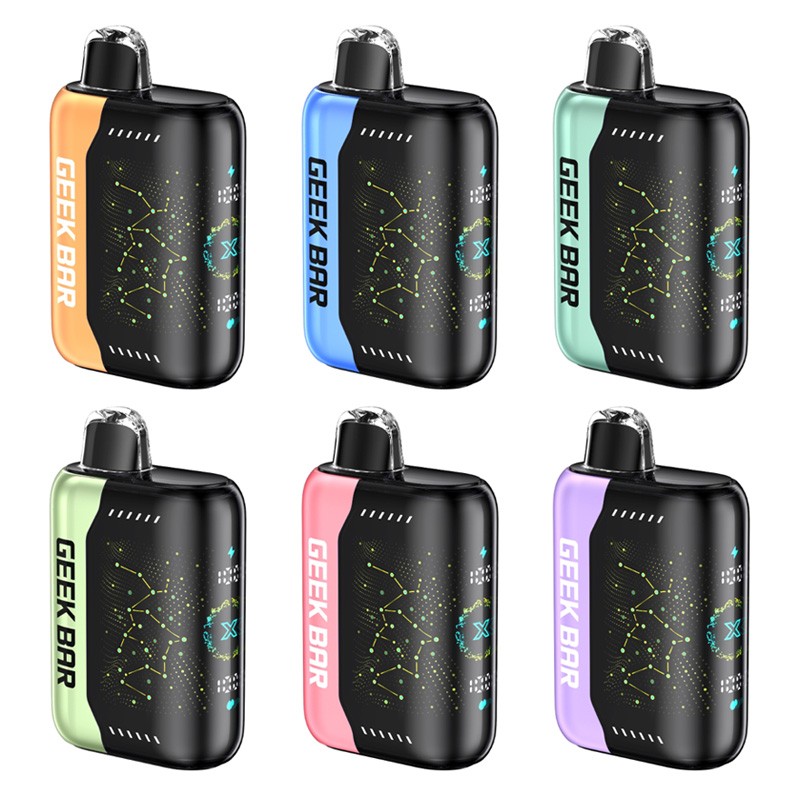
Most electronic devices have wallpapers. Very few have themes in the deeper sense of the word — a coordinated visual identity that flows from the physical exterior into the digital interface and back out again. The Pulse X's "starlight" theme is exactly that. The exterior draws on cosmic imagery: deep purples, midnight blues, scattered points of light suggestive of distant stars, and constellation-like patterns that seem to trace across the body of the device itself. The on-device screen extends the same universe. Instead of a static battery icon or a plain percentage, users see animations that feel like they belong to the same visual world as the shell.
This might sound like a small thing, but it isn't. In consumer electronics, coherence of experience is one of the strongest drivers of perceived quality. When a phone's wallpaper matches the case, when a smartwatch face echoes the strap, when a car's ambient lighting responds to the driving mode — those tiny alignments make the product feel considered. The Pulse X applies that same principle to a category where, historically, the physical device and the on-screen content had nothing to do with each other. The starlight theme is not decoration. It is a design decision that treats the vape as a coherent object with visual grammar.
There is also a subtle psychological layer. Cosmic and starlight imagery evokes calm, wonder, and a sense of scale — emotions that are pointedly different from the aggressive, sports-car-inspired branding that has dominated the category for years. Geek Bar is signaling a mature audience, one that wants their everyday carry to feel elegant rather than loud.
The World's First 3D-Curved Surround Screen
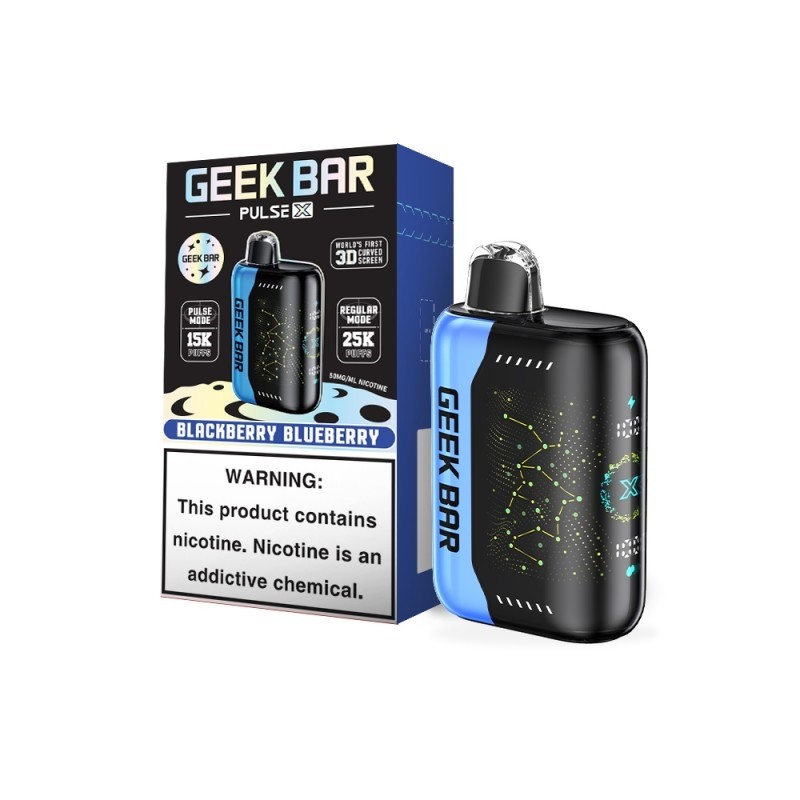
If the starlight theme is the poetry, the 3D-curved surround screen is the engineering. Curved displays are not new in phones or televisions, but implementing one on a device this small, this thin, and this cost-sensitive is genuinely difficult. A surround screen — meaning a display that wraps around more than one face of the device — introduces problems of its own: touch calibration, viewing angles, power draw, structural rigidity, and manufacturing yield. Doing all of that at disposable-friendly price points is a real feat.
The practical benefits are worth listing. A wraparound display means information can follow the user's eye no matter how the device is held. Battery level, e-liquid level, puff count, and mode indicators can be distributed across the curve so that at least one relevant readout is always in view. Animations gain a spatial quality: a constellation drifting across a flat rectangle is a video, but a constellation drifting across a curved surround screen is a small experience. And crucially, the curve softens the silhouette of the device itself, making it feel more like a polished stone than a plastic brick.
The Pulse X's screen is also a meaningful accessibility improvement for anyone who has ever squinted at a tiny status LED. Clear numeric feedback, visible from more angles, in a display large enough to read at a glance — that is the kind of quiet usability win that award juries notice.
Why the Gold Award Actually Matters
Design awards are easy to be cynical about. There are hundreds of them, and many are close to pay-to-play. But when a Gold-tier award goes to a piece of consumer hardware, the judging usually focuses on things that are difficult to fake: originality of concept, quality of execution, coherence between form and function, and — increasingly — how well the design serves the actual user, not just the shelf.
Three things are worth noting about the Pulse X's win.
First, the award recognizes originality of concept. A 3D-curved surround display in this category is not an incremental improvement. It is a category-shifting choice that forces every competitor to react.
Second, the award recognizes execution. Concepts are cheap. Manufacturing a curved screen at scale, integrating it with the housing, keeping the device pocketable, and preserving battery life are hard engineering problems. That the Pulse X ships with all of those problems solved is what turns a nice sketch into a Gold-worthy product.
Third, the award recognizes coherence. The starlight theme, the surround screen, the constellation motifs, the color options that echo cosmic palettes — everything is pulling in the same direction. That level of coherence is uncommon and expensive to achieve, because it requires industrial designers, UI designers, marketers, and engineers to actually agree on a single vision. When they do, you feel it the moment you pick up the product.
The Design Language, Decoded
Let's zoom into the design language itself, because there are patterns here that will influence competing products for the next 12 to 24 months.
Constellation motifs on the display. Rather than using generic icons, the Pulse X uses constellation-like clusters to represent status information. Battery cells, puff indicators, and mode markers are stylized as points of light connected by faint lines. This is functional decoration in the best sense: the pattern is visually distinctive and instantly recognizable across a shelf, but it also encodes real information.
Cosmic gradient shells. The devices come in a family of colors — deep pinks, celestial blues, nebular purples, muted greens — each finished in a way that hints at aurora or nebula imagery. This is a big shift from the metallic, high-gloss finishes that dominated the last generation of premium disposables.
Soft-edged silhouette. The rounded corners and curved screen create a shape that reads more like a pebble than a device. That matters ergonomically — it fits the hand more naturally — and psychologically, because soft shapes are read as approachable and premium.
Coordinated brand mark. The "Pulse X" wordmark is treated with the same restraint as a fashion label. It is visible but never dominant, letting the surround screen and the starlight theme carry the identity.
What This Means for the Rest of the Industry
The Pulse X is not just a product; it is a benchmark. Once a Gold-winning device establishes a new visual and technical standard, competitors face a choice: match it, differentiate from it, or lose relevance. Expect three ripple effects.
First, screens will get bigger and more expressive. The old status LED is dead. Once users experience a full display, they will not go back.
Second, themes will replace textures. The old differentiator was surface finish — matte, glossy, soft-touch, metallic. The new differentiator is coherent theme, meaning a unified concept that runs through the housing, the screen, the packaging, and even the app or web experience if there is one.
Third, industrial design talent will migrate into the category. When a disposable device wins a top-tier design award, it signals to designers coming out of consumer electronics, jewelry, and fashion that this space is now serious. That inflow of talent will accelerate the pace of innovation on the aesthetic side, just as it did for wireless earbuds five years ago.
The User Experience Angle
It would be easy to talk about the Pulse X purely in visual terms, but the more interesting story is how the visuals support the actual experience of using the device. A few examples.
Because the display is larger and more legible, users always know how much battery and e-liquid they have left. That reduces the anxiety of "did I overpay for something that will die tomorrow" that plagues disposables.
Because the theme is coherent, unboxing feels like unboxing a piece of tech, not a piece of packaging. The perceived value goes up before the user even takes a puff.
Because the shell is curved and rounded, the device disappears into the pocket instead of poking. Ergonomics is invisible when it works, but it is one of the biggest reasons users become loyal to a specific product.
Because the constellation motifs are distinctive, the Pulse X becomes recognizable to friends and strangers alike. That kind of social visibility is what turns a product into a small status object, which in turn drives organic word-of-mouth.
A Broader Reflection: Hardware as Story
There is a bigger idea underneath all of this. Consumer hardware is increasingly a storytelling medium. Products that tell a coherent story — visually, emotionally, functionally — outperform products that just list specifications. The Pulse X tells a story about starlight, about calm cosmic wonder, about being a small piece of the universe that fits in your pocket. Whether or not that story resonates with any particular buyer, it is a story, and it is told with unusual craft.
Compare this to what a first-generation disposable used to communicate. The story then was, roughly, "here is a plastic tube with flavor inside." The story now is, "here is an object designed with intent, in a visual world you can step into." That is a category-defining upgrade.
What to Watch Next
Assuming the Pulse X succeeds commercially — and Gold-tier design wins tend to correlate with strong sell-through — expect the following in the next product cycles.
Personalization of the theme. Right now the starlight theme is fixed. The obvious next step is user-selectable themes, seasonal drops, and collaborations with artists or fashion houses.
Deeper integration between screen and behavior. Imagine constellations that shift color as the battery drains, or animations that respond to draw pressure. The hardware is already capable; it is only a matter of software polish.
Sustainability layered onto premium design. As regulators tighten and consumers grow more environmentally conscious, the next Gold winner will need to marry beautiful design with recyclability and reduced material use. Geek Bar has an opportunity here to lead a second wave.
Frequently Asked Questions
Q1. What exactly is the "starlight-inspired exterior" on the Geek Bar Pulse X? It is a coordinated visual theme that uses cosmic imagery — deep purples and blues, scattered points of light, and constellation-like patterns — across both the physical housing and the on-device display. Instead of a simple color or texture choice, the starlight theme is a unified design language that ties the outside and inside of the device into a single visual world.
Q2. What makes the 3D-curved surround screen a "world's first"? Curved displays exist in phones and TVs, but implementing a surround-style curved screen on a device this small, this thin, and this affordable is a genuine engineering novelty. The Pulse X's screen wraps around the device in a way that lets status information follow the user's eye no matter how the device is held, and it does so at a scale and price point that no competitor has previously achieved.
Q3. Why did the Pulse X win a Gold Award this year? Gold-tier design awards typically evaluate originality of concept, quality of execution, and coherence between form and function. The Pulse X scored highly on all three: the surround screen is a category-first idea, the manufacturing execution is polished, and the starlight theme creates rare coherence between the physical device and its digital interface.
Q4. Is the Pulse X actually more useful, or is this just about looks? Both. The larger, curved display shows battery level, e-liquid level, and puff information clearly from more angles, which is a real usability improvement. The rounded ergonomic silhouette makes the device more comfortable in the hand and pocket. The visual polish is the headline, but the day-to-day usability upgrades are what make users stay.
Q5. How does the Pulse X compare to earlier Geek Bar products? Earlier Geek Bar devices were already known for reliability and flavor quality, but their design language was more conventional — clean rectangles with modest screens. The Pulse X represents a step change in ambition. It moves the brand from "well-executed disposable" to "design-led premium object," which is a very different competitive category.
Q6. What does the Gold Award mean for consumers who are not designers? Practically, it is a signal of quality. Awards at this tier are judged by industry professionals who care about details most buyers never notice — material choice, interface coherence, ergonomic subtleties. A Gold win means those details have been checked and validated by people whose job is to be picky.
Q7. Will other brands copy this design direction? Almost certainly. Once a Gold-tier product establishes a new benchmark — bigger screens, coherent themes, curved silhouettes — competitors have to respond. Expect the next 12 to 24 months of new product launches in the category to feature larger displays, more expressive on-screen animations, and more deliberate visual themes.
Q8. Are the different color options just cosmetic, or do they represent different flavors or features? In most product lines that follow this design pattern, color options correspond to flavor profiles, letting users identify their preferred variant at a glance. The color and the on-screen animation are typically tuned to the same theme, so each variant feels like its own miniature universe within the broader starlight family.
Q9. How should I think about buying a product like this compared to a cheaper alternative? It depends on what you value. If the product is purely a means to an end, a cheaper alternative may serve you fine. If you value the ownership experience — the way the device looks, feels, and communicates information — a design-led product like the Pulse X delivers meaningfully more per dollar than the raw specifications suggest. The upgrade is in the experience, not the number of puffs.
Q10. What is the biggest single takeaway from the Pulse X's Gold Award win? The takeaway is that design is no longer optional in this category. Products that treat aesthetics as an afterthought will steadily lose ground to products that treat aesthetics as a core feature, on par with performance and reliability. The Pulse X is not just a better-looking device; it is proof that the entire category has entered its design-driven era.
Closing Thoughts
Awards are moments. Products are legacies. The Gold Award on the Geek Bar Pulse X is a moment worth celebrating, but the more interesting story is what comes next. A device that treats a disposable as a canvas for coherent design, that combines a first-of-its-kind curved surround screen with a starlight visual identity, that quietly upgrades the everyday experience of thousands of users — that is a product that will influence the category long after this year's award cycle is forgotten. The starlight, appropriately, will keep spreading.